

Chainsaws
written by Fred Ginsburg
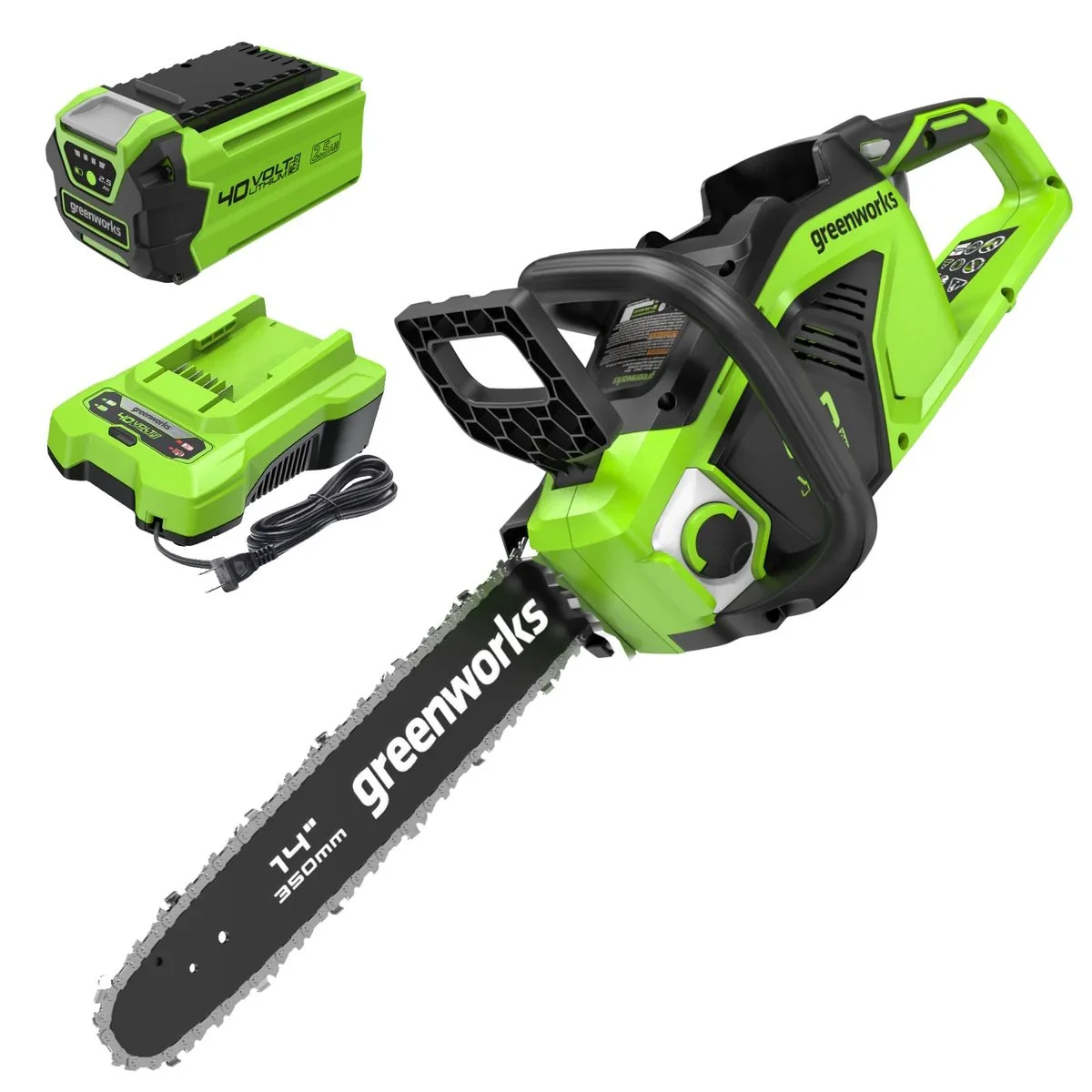
Greenworks offers a variety of economic chainsaws in various sizes.
Depending on your offroad environment, adding a portable chainsaw to your recovery kit may be a good idea. If you travel in a group (always a recommended practice), then only one vehicle needs to stock a chainsaw.
I’ll be honest, we rarely if ever pack a chainsaw out here in the western area, being that the terrain is mostly desert and dry rocky plains. But for those who offroad in the more forested regions – a fallen limb blocking the path is a more common hazard.
Portable chainsaws range in size from 6” to 18” blades and can be battery or gas driven. Prices range from around $100 for a Greenworks (6” chain-pruner), on up to $500-ish for something more lumberjack-ish. Harbor Freight, Lowes, and Home Depot offer a variety of saws at reasonable prices.
If you go with electric, bring along at least two larger capacity batteries. A thick limb can require a lot of cutting; thin limbs can often just be winched out of the road.
If you winch a fallen limb out of the way, always use a thick chain or a tree saver strap, to prevent damage to your winch line.
For gas models, check if they run on plain gasoline (easy to provide out of a Rotopax) or if they need an oil mixture. Mixed fuel will require a separate container. Some chainsaw kits include a carrying case with storage for a ½ gallon container of fuel.
When you cut a thick tree limb, the best technique is to use an alternating V-cut. If you just cut continuously in a narrow slot, the weight of the limb will cause the channel to press closed against the cutting blade. Notching out a V as you cut alternately from side to side will prevent the blade from being sandwiched.
Gloves and safety goggles are a must. You should also have a good first-aid kit, with pressure bandages and tourniquet, just in case the unspeakable happens and flying wood or metal meet flesh.
