

Purchase vs. Lease a Jeep for Serious Off-Roading
written by Jaron Davis
“Editor’s Introduction:
Jaron “Mr. Jeep” Davis is from Chapman Chrysler Jeep in Henderson, NV. He is an off-roading enthusiast and one of our favorite go-to guy’s for real-world Jeep advice. Jaron is a fellow member of Desert Wranglers Jeep Club, and specializes in Jeep sales.
It is a challenge to find an honest and knowledgeable car salesman who is an expert, and just not some quickie hire who doesn’t understand the difference between anti-lock brakes and locking differentials! Yeah, we know that from personal experience. Wish we had met Jaron sooner.”
Q: Should I buy or lease a Jeep Wrangler or Gladiator if I plan to take it off-road regularly?
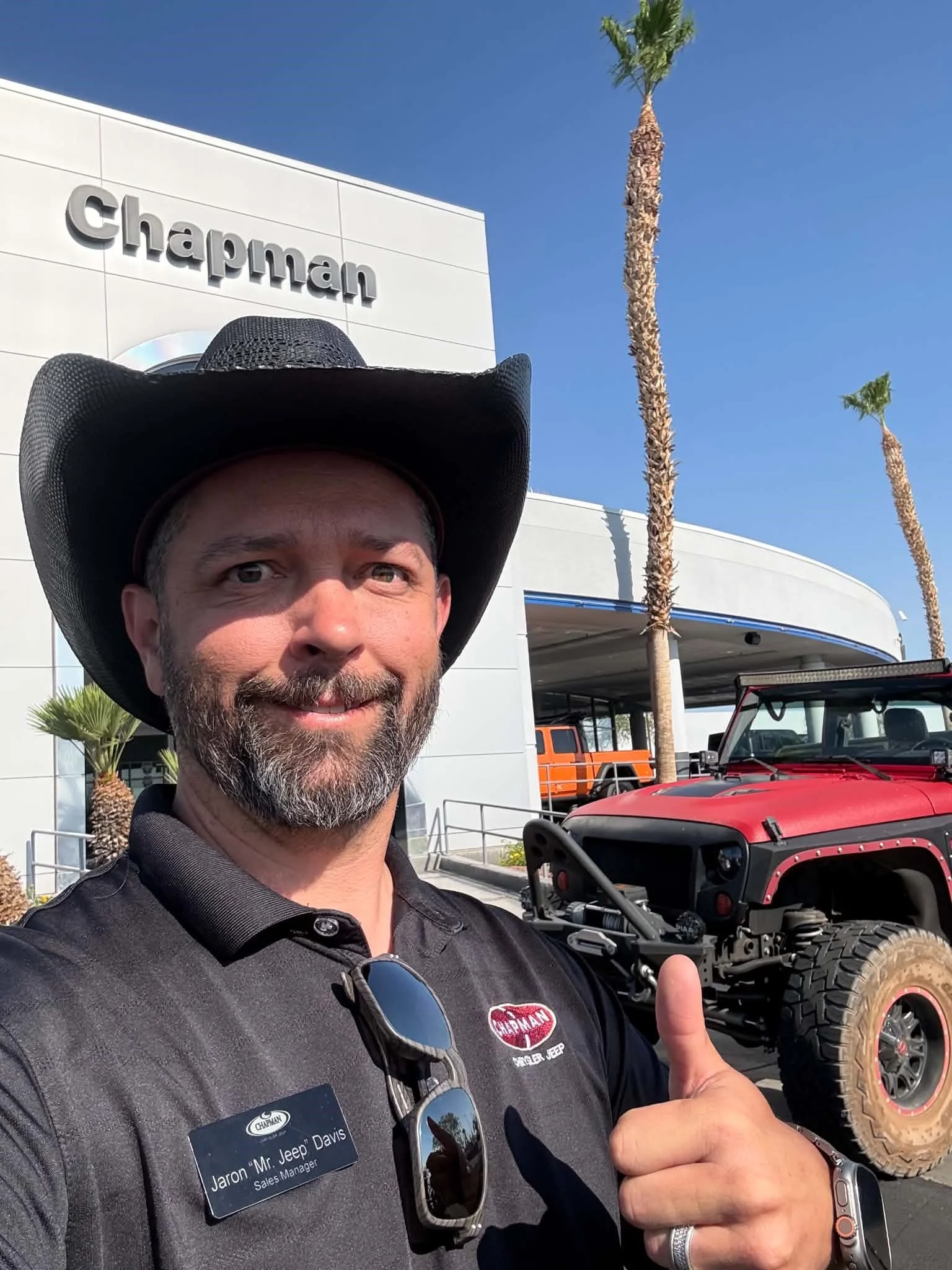
Jaron “Mr Jeep” Davis
A: Buying is generally the better choice for dedicated off-roaders. Ownership gives you full freedom to modify the vehicle without restrictions from the leasing company. Leases are designed around returning the vehicle in near-stock condition, and off-roading naturally produces trail wear that can trigger excess wear-and-use charges.
Key facts on modifications:
• Lifts, larger tires, aftermarket bumpers, rock sliders/skids, and winches are common off-road upgrades. On a leased Jeep, these are typically considered alterations to the vehicle. At lease end, you may need to return it to original condition or face charges to remove them and repair any related damage (such as holes from mounting or altered suspension geometry).
• Permanent mods (welding, cutting, drilling into the body/frame) almost always create issues. Reversible or bolt-on items have a better chance of being acceptable if returned stock, but it’s not guaranteed and adds hassle/cost.
Q: What about minor trail scars, scratches, dings on a leased Jeep? How does Stellantis Financial Services (SFS) handle them?
A: SFS has published Excess Wear & Use (EWU) guidelines. Normal/fair wear is expected, but charges apply beyond certain thresholds:
• Exterior dings/dents/scratches: Chargeable if 2 inches or larger, or more than 4 per panel. Up to $250 per item (max 3 items / $750).
• Minor rock chips, light scratches that can be buffed out, and small dings under the thresholds are often considered normal wear.
• Off-roading increases risk of underbody scrapes, tire wear, and body scratches from branches/rocks. Tires must typically meet minimum tread depth (often 4/32” or better); excessive wear leads to replacement charges.
SFS offers optional Lease Wear and Tear protection products that can cover some of these charges, audio damage, excess tire wear, etc. Loyal customers (who finance/lease another Stellantis vehicle soon after) can get up to $500 EWU credit and waived turn-in fees.
Bottom line for off-roaders: If you rack up trail miles, plan on modifications, or keep vehicles long-term, purchasing lets you build equity and avoid end-of-lease surprises. Leasing works best for low-mileage, mostly stock street use with the option to swap every few years. Always review your specific lease contract and consider a pre-return inspection.
Stop by Chapman Chrysler Jeep and meet with Jaron Davis if you’re in the Henderson/Las Vegas area — he handles the full process himself and can walk through current purchase/lease options tailored to your off-road plans, or just enjoy a cup of coffee and chat for a bit. Let’s get you into the right Jeep for your adventures!
#MrJeep #JeepLife #OffRoading
Got a question for Jaron? Submit it here and we’ll get it over to his desk.
About Jaron Davis
With over 20 years at Chapman Chrysler Jeep in Henderson NV, Jaron started as a salesman and advanced through roles as Internet Sales Manager, Floor Manager, Used Car Manager, and Senior Sales Manager. Today, he’s probably the only Nevada A-Z Specialist who personally handles every step of the process for his customers — from test drives and appraisals to financing, contracts, and extended service contracts/warranties. No handoffs or multiple people involved — just one point of contact for a fast, smooth, and stress-free buying experience. Jaron also maintains a strong social media presence with fun, funny, and exciting Jeep and off-road media and Reels on Facebook and Instagram, as Mr. Jeep.
From the Editors:
Readers send us their tales of woe, when it comes to the issue of purchase v lease. Salespeople (not Jaron) are notorious for saying and promising anything to close a deal. Always make sure to get any and every assurance in WRITING, especially anything concerning if aftermarket modifications will or will not affect warranties; or how they will impact lease returns. Some dealerships are okay with some mods, since they usually increase the resale value of a trade-in. Jeeps have one of the best residual values of any vehicle, with used vehicles often commanding prices near their original cost!
But as Jaron so importantly pointed out, leasing is better suited for those who plan on keeping their Jeep in its stock configuration and do not plan on taking it on offroad expeditions where it is likely to encounter cosmetic trail damage such as paint scratches (pin striping) and small dings.
Stock Jeeps (“daily drivers”) make sense for use on hilly maintained roads subject to snow or heavy rain — such as in Colorado and northern states. Leasing for that situation makes sense, since you are using it for its 4×4 capability on slippery roads.
Embarking over obstacles, rocks, narrow slot canyons, and through scratchy shrubs is totally a different kind of peril — and way more likely to leave cosmetic damage. Some dealerships — especially if you are not immediately purchasing or leasing another new car — may try to nickel & dime you to the extreme, hoping that you do not know the extent of acceptable “normal wear and tear”.
If the Jeep was a purchase and not a lease, then all you have to do is research its used car value “as is” and not worry about removing your aftermarket modifications or paying a body shop to buff out all the scratches and patch any dings or dents.
Dealerships will not “deduct” the actual cost of returning a leased vehicle to its original state; instead they may go nuclear on your wallet and multiply any physical costs astronomically.
Before we owned our Jeep, one of our leased vehicles was a BMW Z4. When we returned it at the end of the lease, the dealer tried to scam us on “excess tire tread wear” because they were a miniscule fraction of an inch worn. I reminded them that we had purchased a full tire protection plan, since replacement BMW tires were extremely costly. “Wear and tear is not covered; only road hazards.”
I told them, “give me a few minutes to drive my car off of the lot. I am sure that some nails or nasty road hazards will probably find their way into my path so that you can replace them all under warranty!” Yes, they removed the penalties.
If a dealer claims that an aftermarket modification has “voided” your MOPAR warranty, get a second opinion. Your warranty is good at any official dealership; not just the one you purchased from.
Our Jeep has a lot of mods, yet our original dealer has never challenged our warranty claims. But a couple members in our Jeep club told us that their warranty claims have been refused by their respective dealers, even when the aftermarket mods had no bearing on the repair issue.
Not all Jeep dealerships are ethical. Read the written contract carefully, and make sure that any promises or assurances are added in writing and approved (signed or initialed) by someone authorized.
Or just find someone that you can trust.
