

It takes an offroad vehicle to go offroading.
Here is advice from “insiders” to help you in your search for a new or used vehicle, or in dealing with service facilities, vendors & suppliers.
Disclaimer: offroading.info receives no financial compensation from any of these industry providers. We asked them to share their knowledge and suggestions, and we identify their companies to establish credibility and to allow readers to reach out to them with questions.
The advice and content are the opinions of the respective authors, and offroading.info is not responsible for any inaccuracies or outcomes. Content is considered “entertainment value” and should not be construed as legal advice. It is always recommended to seek any and all legal advice from licensed attorneys.
If you are an industry insider and interested in submitting content, please contact us.
Dealing with dealerships & vendors
1. Finding a dealer salesperson who speaks Jeep
Purchasing a new or used Jeep (or other 4x4 offroader) can definitely be a challenge, especially if this is your first offroad vehicle. The first thing that happens when you step onto the lot of the dealership will be your being approached by a salesperson. Before the conversation goes too far, your first super important task is to assess that salesperson.
2. The Test Drive
After being greeted by the dealership salesperson and getting past their first level of interrogation as they try to size you up, you will inevitably be taken around the lot and shown some purchase prospects.
As soon as they see you react favorably towards a car, expect to be encouraged to take a test drive, especially if you are not familiar with the make/model or unique features.
3. The Four-square shell game
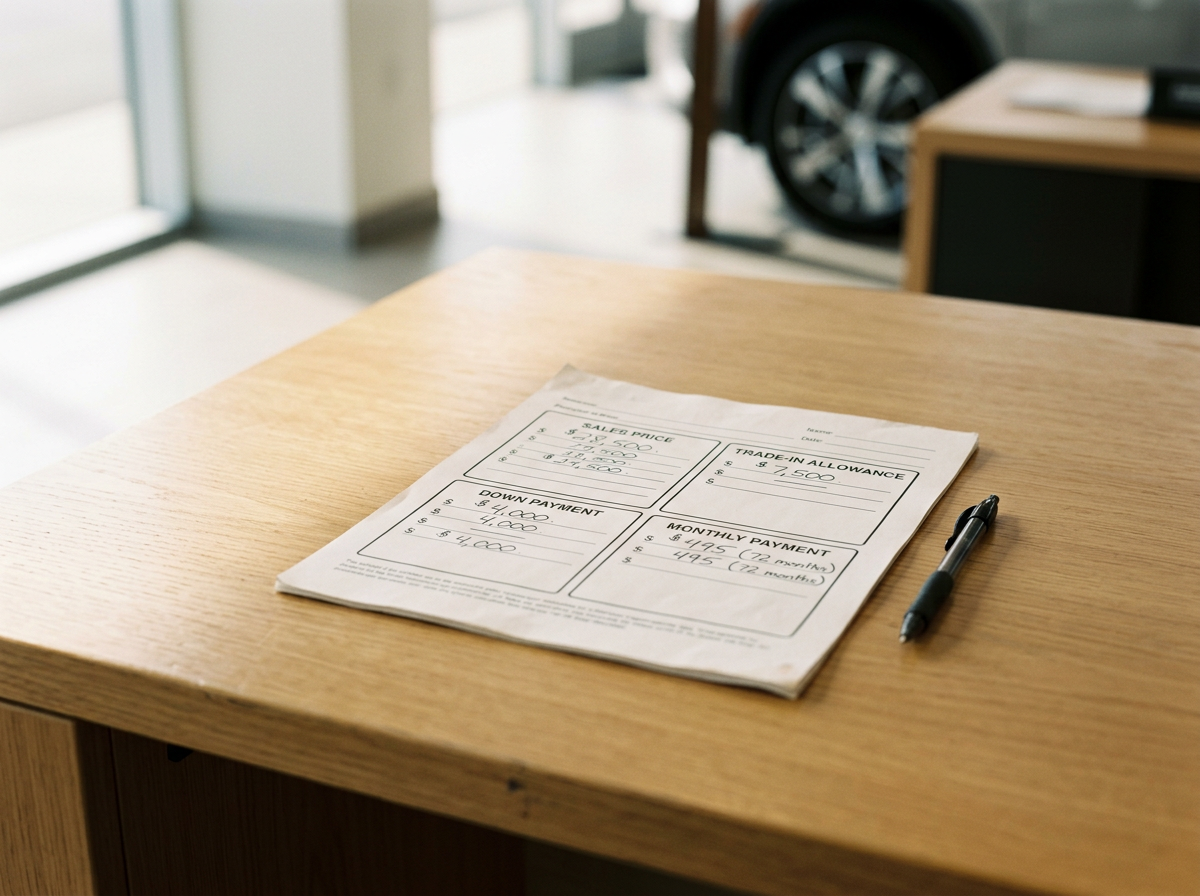
When you finally sit down with the dealership salesperson to negotiate the “deal”, an extremely common practice is for him to begin scribbling on a worksheet known as the FOUR SQUARE.
The "four square" is a car dealership negotiation worksheet split into four boxes: vehicle purchase price, trade-in value, down payment, and monthly payment. Dealers use it to confuse buyers and shift focus to the monthly payment, hiding the true total cost of the vehicle.

4. Out-the-door price
Once you have selected the vehicle that you are interested in purchasing, the next step is to get a written quotation for the total, exact to the penny, cost to drive away in that car. You need to know the base selling price, including all dealer add-ons, options, surcharges, fees, handling, documentation fees, taxes, prep & destination, and any other bullshit that they intend to stick you with. All of those numbers should be clearly listed and broken down individually – leading to the final, out-the-door price. In other words, how much $$$ will the check be made out for.
5. What is your trade-in worth?
To determine your car's trade-in value, gather your vehicle details, check multiple online valuation guides, and secure real cash offers from major retailers.
Trading your car to a dealership is faster than selling it yourself, but the offer is typically closer to wholesale auction value because the dealer must cover reconditioning and resale costs.
In addition to finding out your vehicle’s wholesale (trade-in) value, you should also do an internet search and determine what your car would sell for on the market. That number is important during your negotiation, so that you know how much spread the dealer stands to earn.
6. The finance office
In the car purchasing game, the final stage of negotiation takes place in the Financing Office. You no longer are sitting across from your dealer salesperson, but now must joust with the craftiest person in the dealership – the “closer” who will work feverishly to convert your good deal (for you) into a healthy win for the dealership.
By this point in the negotiations, you should have locked in your out-the-door price for the vehicle, along with a realistic trade-in value.
Don’t congratulate yourself too early on having made a shrewd deal; there are still two more hurdles to clear: financing; and various protection packages or extended warranties.
Purchase vs. Lease a Jeep for Serious Off-Roading
Buying is generally the better choice for dedicated off-roaders. Ownership gives you full freedom to modify the vehicle without restrictions from the leasing company. Leases are designed around returning the vehicle in near-stock condition, and off-roading naturally produces trail wear that can trigger excess wear-and-use charges.